
What HAZMAT Towing Really Involves
Picture a fuel tanker jackknifed on I-75 at 2:30 a.m. in January. Nine thousand gallons of diesel, a ruptured saddle tank, and 500 gallons already pooling into a drainage ditch. A standard tow truck driver shows up with a light duty wrecker designed for passenger vehicles. Now you have two problems. Hazardous material recovery is critical for preventing long-term contamination of soil, water, and air. The Golden First Minutes are vital for preventing a minor spill from escalating into a major disaster. This is not a consumer tow. This is a regulated incident requiring HAZMAT towing services.
This article is written for commercial buyers: fleet managers, risk officers, insurance adjusters, and municipal emergency coordinators who need to compare vendors and understand what separates a qualified hazardous materials recovery operator from a general towing service. HAZMAT towing services cover incident response, containment support, vehicle recovery, and compliant hazardous cargo transport under 49 CFR. The entire process is different from pulling a disabled sedan off the shoulder.
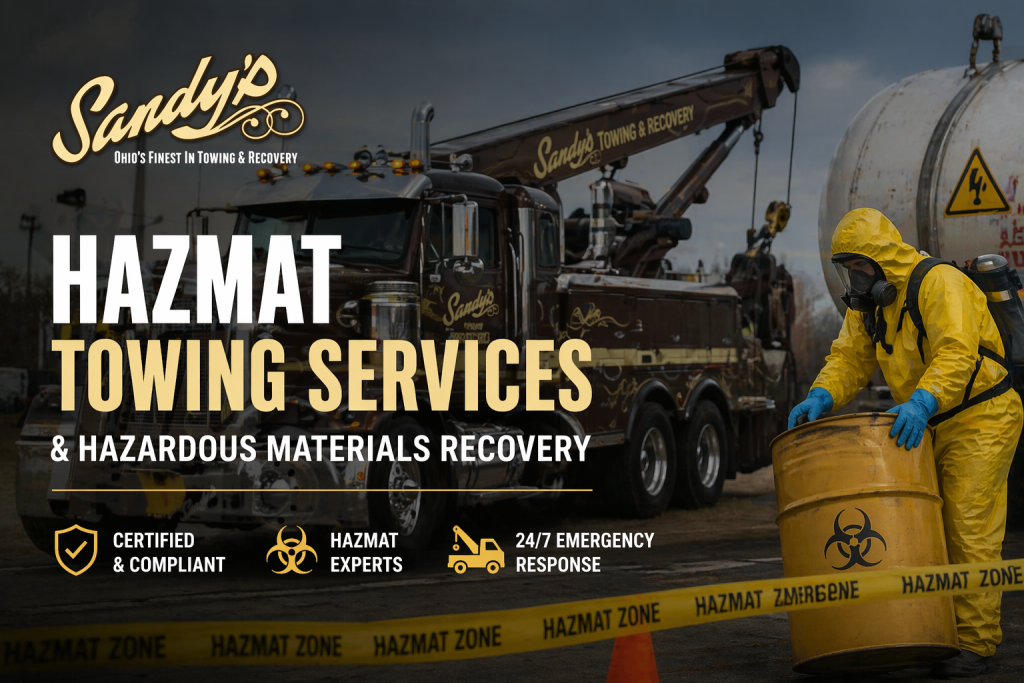
Sandy’s Towing provides 24/7 HAZMAT-capable heavy duty recovery and hazardous cargo transport across Ohio. The team works directly with law enforcement, fire, and environmental contractors to manage complex incidents from first dispatch through site clearance.
When You Need a HAZMAT-Certified Recovery Operator
Not every incident requires a certified hazmat operator. But when the threshold is crossed, a standard tow company creates more risk than it solves. Here is a practical checklist for when specialized recovery becomes mandatory:
- Fuel tanker rollovers with visible product leaking or strong fumes
- Chemical tanker recovery involving Class 3 (flammable liquid), Class 8 (corrosive), or Class 2 (gas) loads
- Leaking totes, drums, or containers at distribution facilities
- Reefer units carrying spoiled regulated product
- Box trucks with mixed hazardous cargo after collision
- Any damaged placard or compromised cargo tank shell
- Materials listed in the Emergency Response Guidebook (ERG) as requiring isolation or evacuation
Ohio scenarios occur regularly: an overturned tractor trailer on I-70 near Dayton with a breached chemical tote, a leaking hydrochloric acid container at a Vandalia distribution center, or a propane transport incident on a rural two-lane road. Dispatchers, risk managers, and responding officers should specifically request a “HAZMAT-certified heavy duty wrecker” rather than a generic tow. This ensures the right equipment and training mobilize from the start.
Regulatory Framework for HAZMAT Towing: DOT, EPA, OSHA, 49 CFR
Hazardous materials recovery operates under overlapping federal regulations. Commercial accounts remain liable even when they hire a vendor, so understanding these requirements protects both operations and safety ratings.
49 CFR HAZMAT Transport Requirements (Parts 171-180):
- Proper shipping name and UN/NA numbers must be verified before any move
- Placarding is mandatory for loads over 1,001 lbs of hazardous materials
- Segregation rules apply (acids separated from flammables by at least 10 feet)
- Transfer of custody requires documentation during recovery and secondary transport
- Drivers moving loaded HAZMAT units must hold a CDL with DOT hazardous materials endorsement
FED-STD-313 establishes requirements for the preparation and submission of Material Safety Data Sheets (MSDS) by contractors providing hazardous materials to government activities, aimed at ensuring safety and compliance. The Hazardous Materials Information Resource System (HMIRS) serves as a central repository for these MSDS documents, ensuring safe handling, storage, and disposal.
EPA Responsibilities:
- Spill reporting triggers for releases exceeding reportable quantities (e.g., 100 lbs for many chemicals, 5 gallons for oil)
- Environmental protection oversight under CERCLA and SPCC rules
- Remediation coordination through the National Contingency Plan
OSHA Worker Safety (HAZWOPER, 29 CFR 1910.120):
- 40-hour HAZWOPER training required for uncontrolled releases
- Site control zones (hot, warm, cold) must be established
- Medical surveillance for exposed personnel
- Compliance with OSHA regulations is essential for the safe handling and disposal of hazardous materials, which includes proper training and use of safety equipment by personnel involved in hazmat recovery
Detailed tracking of waste from cradle to grave is essential for regulatory compliance during hazmat recovery. A qualified HAZMAT towing provider must maintain written procedures and documented training aligned with these rules.
The HAZMAT Recovery Process: From Dispatch to Site Clearance
Sandy’s Towing follows a structured workflow during hazardous incidents. Effective hazmat recovery requires a structured approach that includes immediate response, tactical recovery, and long-term restoration.
Stage 1: Dispatch Intake. The call captures UN/NA numbers, placards, cargo type, bill of lading details, and carrier contact information. Dispatchers reference ERG guides and determine if the site involves a Tier II facility with additional reporting requirements.
Stage 2: Information Gathering. Photos from officers, wind direction, and approach routes are assessed. Responders must identify the substance before taking actions to manage a spill. This data determines which equipment rolls.
Stage 3: Incident Command Coordination. The first arriving responder at a hazmat incident should act as the Incident Commander until relieved by more qualified personnel. Sandy’s crews integrate with NIMS-based incident command structures, coordinating with fire, law enforcement, and environmental personnel.
Stage 4: Mobilization. Heavy duty wreckers and rotators deploy with spill kits including 500-foot booms, absorbent pads, and overpack drums. Trucks stage outside hot and warm zones until cleared for approach. Establishing a hot, warm, and cold zone prevents exposure to unknown chemicals.
Stage 5: On-Scene Assessment and Stabilization. Crews assess shell integrity, vapor levels (using 4-gas meters for LEL, O2, CO, H2S), and ground conditions. Decontamination is necessary to prevent contamination from being tracked into safe zones. Neutralization of spills may involve using appropriate chemicals to counteract the effects of hazardous substances.
Stage 6: Recovery Operations. Key actions in hazmat recovery include isolating the affected area, using proper personal protective equipment, and following established incident command structures. Air cushions (75-ton lift capacity) or winches (100k lb pull) upright tankers. Recovery efforts focus on stopping the spread of hazardous material and removing it from the environment.
Stage 7: Handoff and Transport. Site release forms transfer to environmental contractors. Secondary transport uses placarded trailers with 49 CFR-compliant documentation. Best practices for hazardous materials recovery prioritize safety, rapid containment, and decontamination throughout this entire process.
Equipment and Certifications That Separate Qualified Providers
Not every towing company is equipped for chemical tanker recovery or EPA-sensitive incidents. Light-duty towing services typically involve vehicles weighing up to 10,000 pounds and include assistance such as tire changes, jump starts, and lockouts. Hazardous materials recovery requires different types of resources entirely.
Sandy’s HAZMAT Recovery Equipment:
- Heavy duty wreckers (50-ton capacity and above)
- Rotators for tanker uprighting (65-75 ton rotating recovery cranes capable of handling 25 to 100 tons)
- Air cushion recovery systems for controlled lifts
- Lowboys and Landoll trailers (80k GVWR) for flatbed transport
- Spill containment kits: absorbent booms/pads, 55-gallon overpack drums, drip pans
- Transfer pumps (500 gpm capacity) for product offloading
- Non-sparking brass tools, temporary patch and plug kits
Certifications and Training:
- CDL with DOT hazardous materials endorsement (biennial testing, TSA background check)
- HAZWOPER 40-hour training with annual 8-hour refresher
- 49 CFR HAZMAT awareness/operations training (recurrent every 3 years)
- State-specific HAZMAT response credentials where applicable
Proper personal protective equipment for hazmat cleanup includes chemical-resistant gloves, eyewear, and self-contained breathing apparatus if necessary. Every tow truck and operator on Sandy’s HAZMAT roster carries this gear.
Towing capacity refers to the maximum weight a vehicle can safely tow, which varies based on whether the trailer has its own braking system (braked towing capacity) or not (unbraked towing capacity). For HAZMAT loads, this calculation becomes even more critical given cargo sensitivity.
A typical consumer tow operation may have light duty flatbeds and no specialized hazmat training. Putting an unqualified operator into a regulated spill scene creates regulatory exposure, environmental risk, and extended towing fees for secondary recovery when the job goes wrong.
Liability, Insurance, and Risk Management for Commercial Accounts
The way a spill is handled affects DOT safety ratings, environmental penalties, cleanup costs, and civil litigation. Vendor choice is a measurable risk decision, not just a procurement task.
Responsibility flows from carrier or shipper as primary parties, but vendors can either protect or expose clients through documentation quality, chain-of-custody handling, and adherence to 49 CFR and EPA rules. EPA data shows average hazmat spill cleanup costs range from $50,000 to $500,000 depending on volume and material. OSHA fines averaged $14,500 per incident in 2023 for non-compliance.
For commercial HAZMAT recovery, specialized insurance coverage matters:
- Pollution liability ($5-10M limits recommended)
- HAZMAT transport coverage
- Heavy duty recovery operations coverage ($2M+ auto liability)
Documented HAZMAT recovery protocols, incident reports with photos and timestamps, and coordination with insurers reduce disputes and claim costs. Selecting the lowest-cost, non-certified vendor at 2 a.m. often costs more later through additional cleanup bills, cargo loss, equipment damage, and regulatory scrutiny.
Response Time, Coverage Area, and SLA Expectations
Serious HAZMAT incidents are time-sensitive, but safe, structured deployment matters more than simply arriving fast. Rushing personnel into an uncontrolled scene creates additional risk.
Sandy’s Towing targets rapid response windows for HAZMAT-capable heavy duty units within the primary metro coverage area under normal conditions.
Geographic Coverage:
- Major interstates: I-70, I-75, US-35
- Key industrial zones and distribution corridors
- Counties including Clark, Montgomery, and Miami
- Urban hubs: Dayton, Vandalia, and surrounding areas
Fleet managers and municipal coordinators can establish pre-negotiated service level agreements including:
- Dedicated contact protocols and direct dispatch lines
- Incident escalation trees for complex recoveries
- Preferred-vendor status with local PSAPs and dispatch centers
- Documented response expectations for different incident types
Formalizing these expectations in a written agreement means that when an event occurs, everyone knows who to contact and what resources are coming.
How Sandy’s Towing Delivers HAZMAT Towing Services
Sandy’s Towing operates as a commercial HAZMAT recovery partner, not a retail tow provider handling jump starts and lockouts for SUVs on the side. The structure is built for regulated incidents requiring coordination across multiple agencies.
Dispatch Capabilities:
- 24/7 dispatch with redundant communications
- Direct lines for commercial accounts
- Integration with local PSAPs and emergency management agencies
HAZMAT Fleet Assets:
- Heavy duty wreckers assigned to hazardous materials recovery
- Rotators for fuel tanker rollover recovery and chemical tanker uprighting
- Transport trailers equipped for compliant hazardous cargo transport
Sandy’s coordinates with environmental contractors, fire departments, and law enforcement to ensure EPA-compliant recovery and safe scene turnover. Proper cleanup transforms contaminated sites back into productive open spaces for community use, referred to as brownfields. This end-to-end coordination minimizes downtime and compliance exposure for motor vehicles involved in incidents.
Ready to establish Sandy’s as your designated HAZMAT towing provider? Call (800) 762-4357 for commercial dispatch and pre-incident planning to add reliable towing to your emergency response network.
Industries That Rely on Commercial HAZMAT Recovery
Sandy’s Towing works with industries where hazardous materials recovery and transport are core operational risks:
- Long-haul trucking fleets: Fuel tanker rollover recovery, diesel spill containment, trailer repair coordination
- Regional LTL carriers: Mixed hazardous cargo incidents, construction material spills
- Bulk fuel and propane distributors: Tank truck recovery, product transfer operations
- Chemical manufacturers and distributors: Chemical tanker recovery, corrosive material containment
- Waste and recycling haulers: Regulated material spills, containers requiring controlled transport to disposal facility
- Agricultural suppliers: Fertilizer and pesticide spills, storage tank incidents
- Municipal and county agencies: Public safety response coordination, emergency preparation for highway incidents
Sandy’s coordinates with insurance carriers and third-party administrators managing claims for these industries, improving cycle time and documentation quality. Occupational safety and health administration standards apply across these sectors.
Prospective clients should add Sandy’s Towing to call trees and written emergency response plans. Tier II reporting and local emergency planning committee (LEPC) coordination often requires identifying pre-approved recovery vendors who can provide information quickly during incidents.
Frequently Asked Questions About HAZMAT Towing Services
These questions address common RFP topics and dispatcher inquiries during live incidents.
What is HAZMAT towing and how is it different from regular towing? HAZMAT towing involves the recovery and transport of vehicles and cargo containing regulated hazardous materials. Operators must follow 49 CFR hazardous materials regulations, coordinate with incident command, and protect against releases. Regular towing of other vehicles does not require this level of regulatory compliance, specialized equipment, or training.
Who is responsible for hazardous materials during a recovery? The carrier or shipper holds primary responsibility under 49 CFR 172.204. However, recovery vendors can either protect or expose clients through documentation and handling practices. Coast Guard, EPA, and state environmental agencies may oversee remediation depending on release location.
Can a tow company move a loaded tanker after a spill? Yes, but only with drivers holding a hazardous materials endorsement, following 49 CFR transport rules, and coordinating with incident command. Product is typically offloaded or stabilized first, then the tanker is uprighted and towed to a secure location or storage facility.
What certifications should a HAZMAT recovery provider have? Look for CDL drivers with DOT hazardous materials endorsement, HAZWOPER training for on-scene personnel, and documented 49 CFR hazardous materials training. Providers should maintain pollution liability insurance and written procedures for hazardous materials recovery.
How fast can Sandy’s Towing respond to an interstate rollover? Response times depend on location and conditions. HAZMAT-capable heavy duty units dispatch 24/7 with targeted arrival windows for Ohio corridors including I-70 and I-75. Call Sandy’s commercial dispatch at (800) 762-4357 to confirm current service level expectations for your routes.
Does insurance cover HAZMAT spill response towing and cleanup? Coverage varies by policy. Commercial auto and cargo policies may cover towing fees, while pollution liability addresses environmental cleanup. Sandy’s documentation and reporting practices help support claims with insurers and adjusters.
How do we set up Sandy’s as our preferred HAZMAT recovery vendor? Fleet managers, risk officers, and municipal coordinators can contact Sandy’s commercial team to exchange documentation, confirm coverage, and execute a service agreement. Once the program is in place, your dispatch teams access a dedicated 24-hour commercial number for HAZMAT towing services: (800) 762-4357.
Partner with Sandy’s Towing Before the Next HAZMAT Event
Proactive vendor selection matters for hazardous materials recovery. The time to establish a relationship is before the next 2 a.m. tanker rollover, not during it. Commercial accounts that pre-position qualified recovery partners reduce downtime, compliance exposure, and total incident cost.
Sandy’s Towing offers 24/7 heavy duty HAZMAT towing services, certified operators with hazardous materials endorsements and HAZWOPER training, documented procedures aligned with 49 CFR and EPA requirements, and experience with complex tanker and hazardous cargo incidents across Ohio.
Fleet managers, risk officers, and municipal coordinators: schedule a pre-incident planning call, request documentation, or execute a service agreement now. Contact the dedicated commercial dispatch number at (800) 762-4357.
Add Sandy’s Towing to your written emergency response plans and internal contact lists as your primary HAZMAT towing and recovery partner in the region.